ActiveCampaign — Complete AI Tool Review
ActiveCampaign occupies a strategic position that no other marketing platform has fully replicated: more powerful automation than Mailchimp, significantly more affordable than enterprise platforms like Marketo or HubSpot Marketing Professional, and increasingly competitive with HubSpot for the integrated marketing + CRM use case at mid-market prices. With 180,000+ customers across 170 countries and over $100 million in annual recurring revenue, it has become the default marketing automation choice for businesses that have outgrown basic email newsletters but don’t have enterprise budgets.
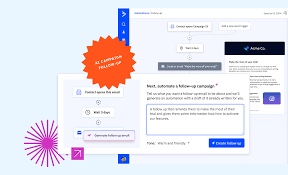
The defining technical capability of ActiveCampaign is its automation engine — a visual workflow builder that triggers on any combination of email behavior, website activity, CRM field changes, form submissions, SMS interactions, custom API events, and time-based conditions. This conditional trigger sophistication allows businesses to build remarkably personalized, behavior-responsive customer journeys without custom code. The AI layer — Predictive Sending, Predictive Content, and Win Probability — applies machine learning optimization on top of this automation foundation.
ActiveCampaign AI Features — Complete Guide
- Predictive Sending (Send Time Optimization): Machine learning model that determines the optimal send time for each individual subscriber based on their personal historical engagement patterns — not aggregate segment averages. The model analyzes that subscriber’s historical email open times, click behavior, and engagement history to predict their next high-engagement window. Instead of sending a campaign at 10am Tuesday to your entire list, Predictive Sending queues each individual subscriber’s email to deliver at their personal optimal time over a 24–72 hour window. Teams using Predictive Sending consistently report 10–25% improvement in open rates and 15–30% improvement in click rates compared to standard batch-and-blast scheduling.
- Win Probability (AI Deal Scoring): Machine learning model in ActiveCampaign’s CRM that assigns a percentage probability to every deal based on patterns learned from your historical won and lost deals. The model analyzes: deal size relative to historical wins, time in current stage, engagement frequency and recency, industry and company size attributes, rep performance history, and communication sentiment indicators. Win Probability updates dynamically as deal attributes change — a deal that’s been quiet for 2 weeks will show decreasing probability; a deal that just had a positive call will show increasing probability. Sales managers use Win Probability to prioritize pipeline review conversations and identify which deals need immediate intervention.
- Predictive Content: Dynamically shows different email content blocks to different subscribers based on their predicted preferences and behavior patterns. Define multiple content variants for a section of your email — for example, three different product recommendation blocks — and ActiveCampaign’s AI selects which variant each individual subscriber sees based on their purchase history, engagement patterns, and demographic attributes. Predictive Content brings the individual personalization of sophisticated e-commerce platforms to any email marketing program.
- Advanced Marketing Automation Engine: The automation engine that drives the platform. Create sequences triggered by: email opens, clicks, non-opens, website page visits, purchase events (via e-commerce integrations), form completions, tag additions, CRM stage changes, custom event triggers, and time delays. Apply conditions within automations: if contact is tagged ‘enterprise’, branch to enterprise-specific content; if contact has purchased Product A, skip the purchase-focused emails and send upgrade content. Build sequences of any length and complexity — ActiveCampaign automations serve as the customer journey infrastructure for businesses with sophisticated multi-touchpoint marketing strategies.
- Site and Event Tracking: JavaScript tracking snippet tracks individual contact behavior on your website — which pages they visit, which products they view, how much time they spend. This behavioral data feeds into automations (trigger email when specific page visited, update lead score when pricing page viewed) and segmentation (create segment of contacts who visited pricing page without purchasing). Event tracking captures custom application and product events — log when a user upgrades their plan, completes onboarding, or uses a specific feature — allowing product-behavior-triggered marketing automation.
- Unified Contact Record: Every contact has a single 360-degree record showing all touchpoints: every email sent and its engagement status, every automation they’re enrolled in, their complete web browsing history (pages visited, time spent), their CRM deal and stage history, SMS message history, site chat interactions, and custom event log. Sales reps accessing this record before a call have complete visibility into exactly what marketing materials the prospect has engaged with, which product pages they’ve visited, and how they’ve responded to previous outreach — enabling highly informed, personalized sales conversations.
ActiveCampaign Pricing
Marketing Lite ($15/month, 500 contacts): Email marketing, site tracking, 1 automation per contact at a time, basic reporting. Starting point for simple automation.
Marketing Plus ($49/month, 500 contacts): Landing pages, Facebook custom audiences, contact scoring, SMS marketing, advanced automations, and popup forms.
Marketing Professional ($79/month, 500 contacts): Predictive Sending, Win Probability, split automations, site messaging, Salesforce integration, and predictive content. The plan that unlocks the full AI capability.
Enterprise (Custom): Custom contact limits, dedicated account rep, custom reporting, SSO, unlimited users, HIPAA compliance, and custom mail server domain.
Note: All prices scale with contact count. 500 contacts are included at base pricing — pricing scales as your list grows. 50,000 contacts on Professional = approximately $286/month.